Does AI have a place in music?
Professor and program coordinator Colin Mills says music industry leaders are still waiting to see how AI will impact jobs in the field
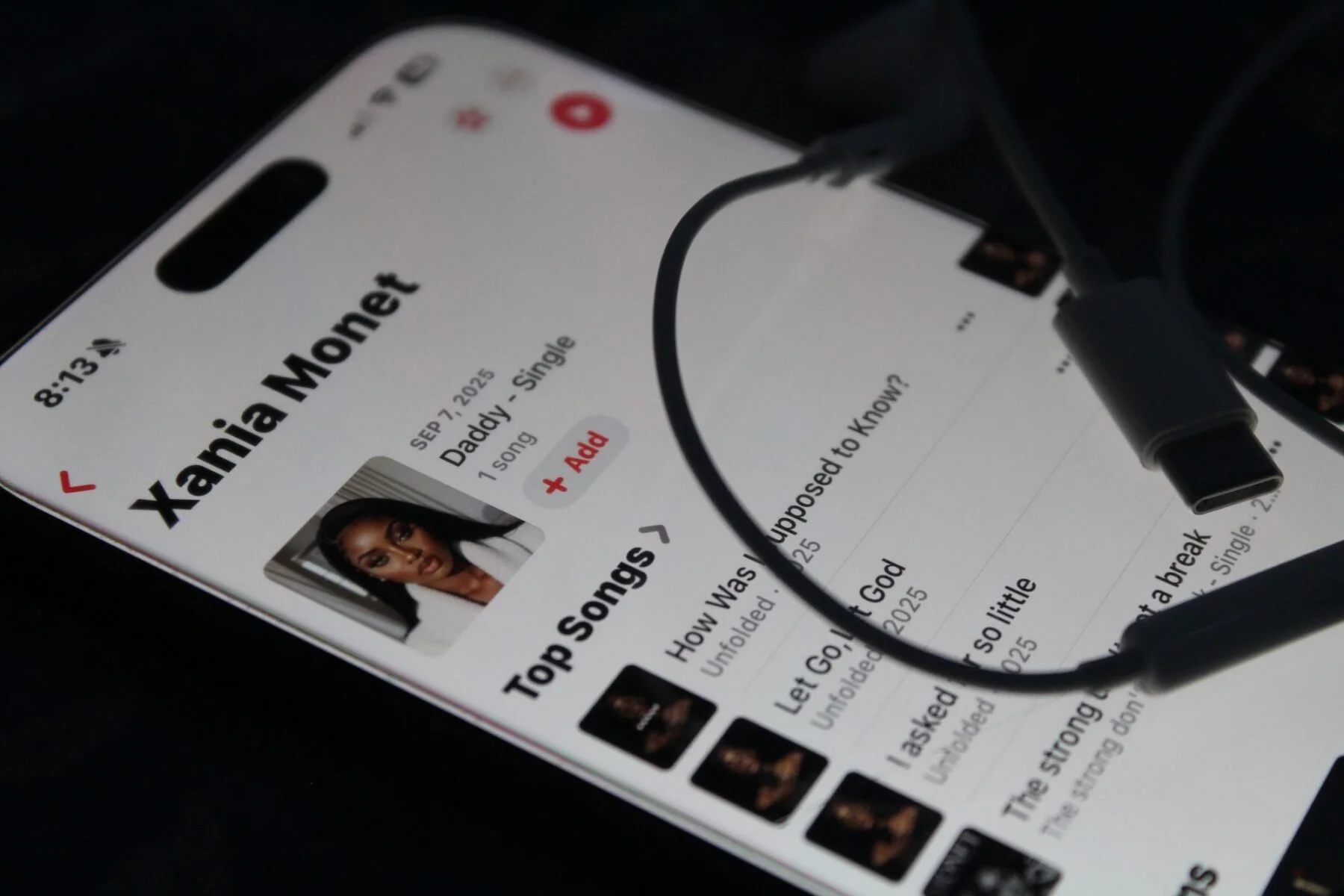
Xania Monet is the first ever AI artist to appear on the Billboard airplay chart.
Photo: Janella Milord Ashford
Music industry arts student Thomas Burr laughed when he first heard you could make music using artificial intelligence.
“No way people are bumping AI music,” says Burr. “Music is about the feeling, it’s about the human connection.”
On the other hand, music industry arts program coordinator and professor Colin Mills says AI can be a useful tool for the industry.
“I think it’s a valuable tool to use in music production and even in marketing, you can create some assets,” says Mills. “It can be very beneficial, at least to spark some ideas that someone might not be able to think of on their own.”
AI artist Xania Monet is the project of a Mississippi poet and design-studio owner, Telisha Jones, who used Suno to turn her lyrics into music. Monet just signed a $3-million record deal with Hallwood Media and released an album on all platforms, sitting at over 17 million streams.
The news has creatives wondering whether this was a loophole for record labels to make more money.
Burr says the AI program appropriates vocals and sounds from a library database that holds songs created by artists all over the world.
“A lot of our students that are songwriters and producers want to make sure that AI isn’t going to take materials that they put out there, and use it for something new that they’re not going be compensated for or connected to in any way, and that’s the big concern,” says Mills.
“Labels will start prioritizing AI artists because the rich are money hungry and they always choose the easiest option,” says Burr. “Not the option that supports the artists.”
Mills says it’s still a give-and-take situation.
“There’s going to be some companies out there who realize, ‘We can create our own content and control everything and own everything and put it out there and not have to pay someone’, but they’re still paying staff to do that,” says Mills.
Photo credit: Janella Milord Ashford
Juno Award-winning songwriter and producer Daniel “GoldStripes” Desir is exploring a trial run of Suno himself.
“Recently I started experimenting with Suno just to see what power it has,” says Desir. “I’m not afraid that it’s going be able to copy me ever, and if it does, that means I made it.”
The use of AI in any field right now has the world divided.
“It’s going get a lot harder to make it big because the industry will become so saturated with AI music that is then going to inspire more AI music,” says Burr. “We need to continue to push for supporting artists and continue to push for real good music.”
But music industry experts are not intimidated by AI — they are actually embracing it.
“I think AI is going to have its place. I don’t think AI artists are going to replace other artists,” says Mills.
As a creative, Desir believes you must use the tools at your disposal and ignore the outside perspectives of what may be right or wrong. He believes that using AI to help curate art does not take away from the artist.
“At the end of the day, we hear something, it inspires us, and we keep going. Maybe AI is just a tool to allow us to hear and open up our mind a bit more,” says Desir.

